
Have you ever stood in the grocery aisle, squinting at a food label packed with unfamiliar, multi-syllabic ingredients, wondering what they really mean? You’re not alone.
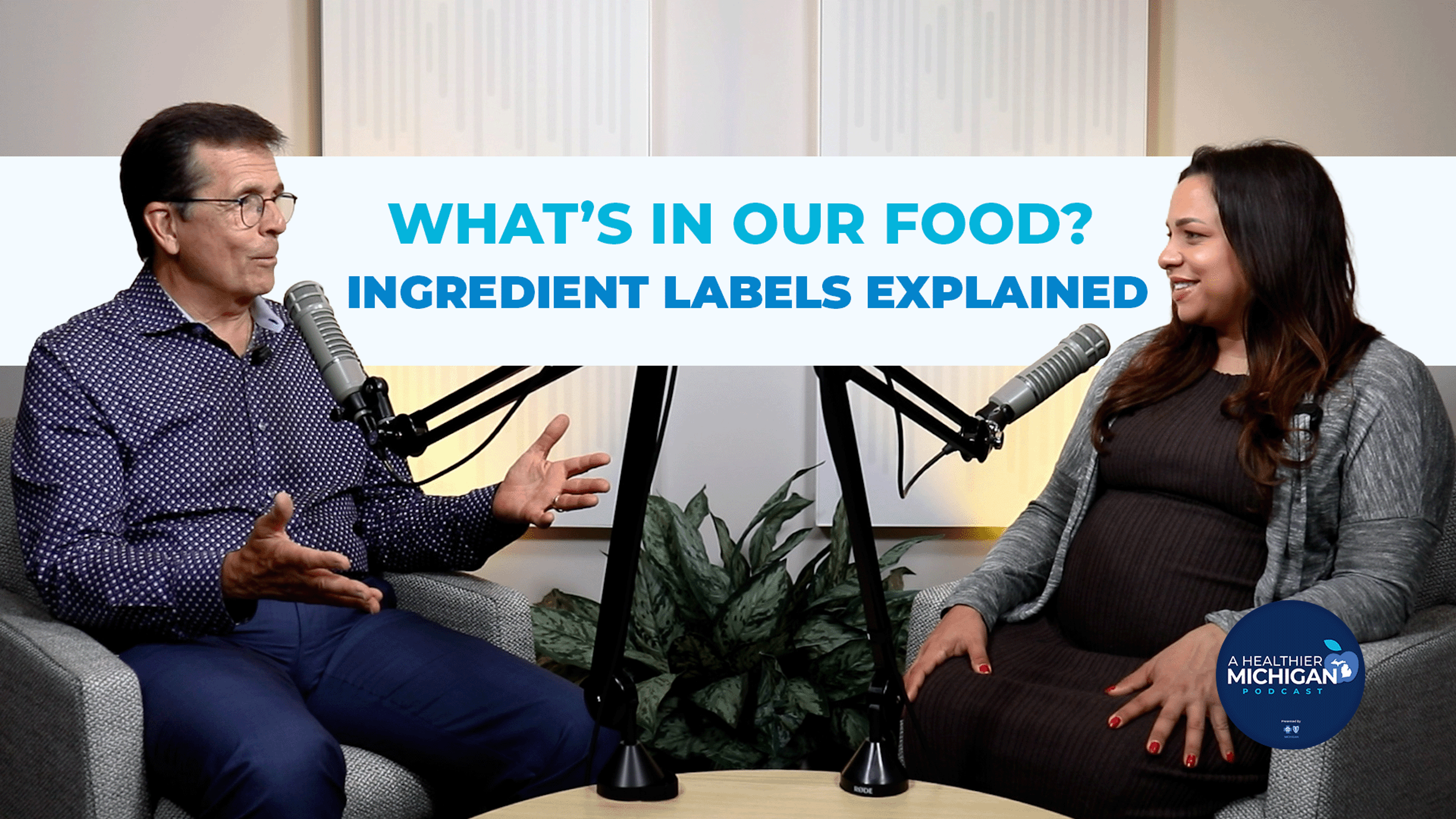
In a recent episode of the A Healthier Michigan Podcast, host Chuck Gaidica and Blue Cross Blue Shield of Michigan registered dietitian Shanthi Appelö broke down how to navigate ingredient lists without fear or guilt—helping shoppers make more informed, confident choices.
How to approach hard-to-pronounce ingredients
Just because an ingredient is hard to pronounce doesn’t mean it’s bad for you, and a “healthy-sounding” name isn’t always a green light. Appelö advises starting with the basics: focus on the first three ingredients, since they’re listed by weight and make up most of what you’re eating. Ideally, these should be whole foods. But don’t panic if you spot a scientific-sounding name. Many, like ascorbic acid (vitamin C) or alpha tocopherol (vitamin E), are just the technical terms for familiar nutrients.
Why are there so many ingredients?
Ever checked the label on grocery store sushi and been surprised by its length? Additives such as preservatives and emulsifiers are often there to improve shelf life, texture or flavor. For example, stabilizers in peanut butter keep it creamy, while extra vitamins in “enriched flour” are added to replace nutrients lost during processing. These additions aren’t necessarily negative, but knowing their purpose can help you decide if a product fits your needs.
Ultra-processed doesn’t always mean unhealthy
Appelö notes ultra-processed foods, those far removed from their natural state, are linked to greater risks of chronic diseases. Yet, not all processed foods are created equal. Naturally occurring additives like pectin (a thickener from fruit) or citric acid (a natural preservative) often serve the same functions as synthetic ones. The key is balance: consider your health goals, budget and how long you want food to last.
Sugar, sweeteners and serving sizes
Don’t be fooled by “zero sugar” or “low calorie” claims. Manufacturers often use artificial sweeteners or sugar alcohols, which may affect your body differently than sugar. Also, pay attention to serving sizes, small portions can make a product seem healthier than it is. And those hard-to-pronounce “-ose” ingredients? They’re usually sugars in disguise.
Takeaways for smarter shopping
Get familiar with common ingredient terms, but don’t let long lists or foreign names scare you away. Focus on what matters to you, whole foods at the top of the list, reasonable serving sizes and ingredients that fit your lifestyle and preferences. As Gaidica and Appelö agree, a little knowledge goes a long way in making balanced and enjoyable food choices, whether you’re reaching for sushi, Nutella or anything in between.
Listen to the podcast, What's In Our Food? Ingredient Labels Explained, to hear the entire conversation. A Healthier Michigan Podcast is brought to you by Blue Cross Blue Shield of Michigan. To hear more episodes on your smartphone or tablet, subscribe on Apple Podcast or Spotify or your favorite podcast app.