Breathing is something we do all day, every day. It seems like a no-brainer, right?
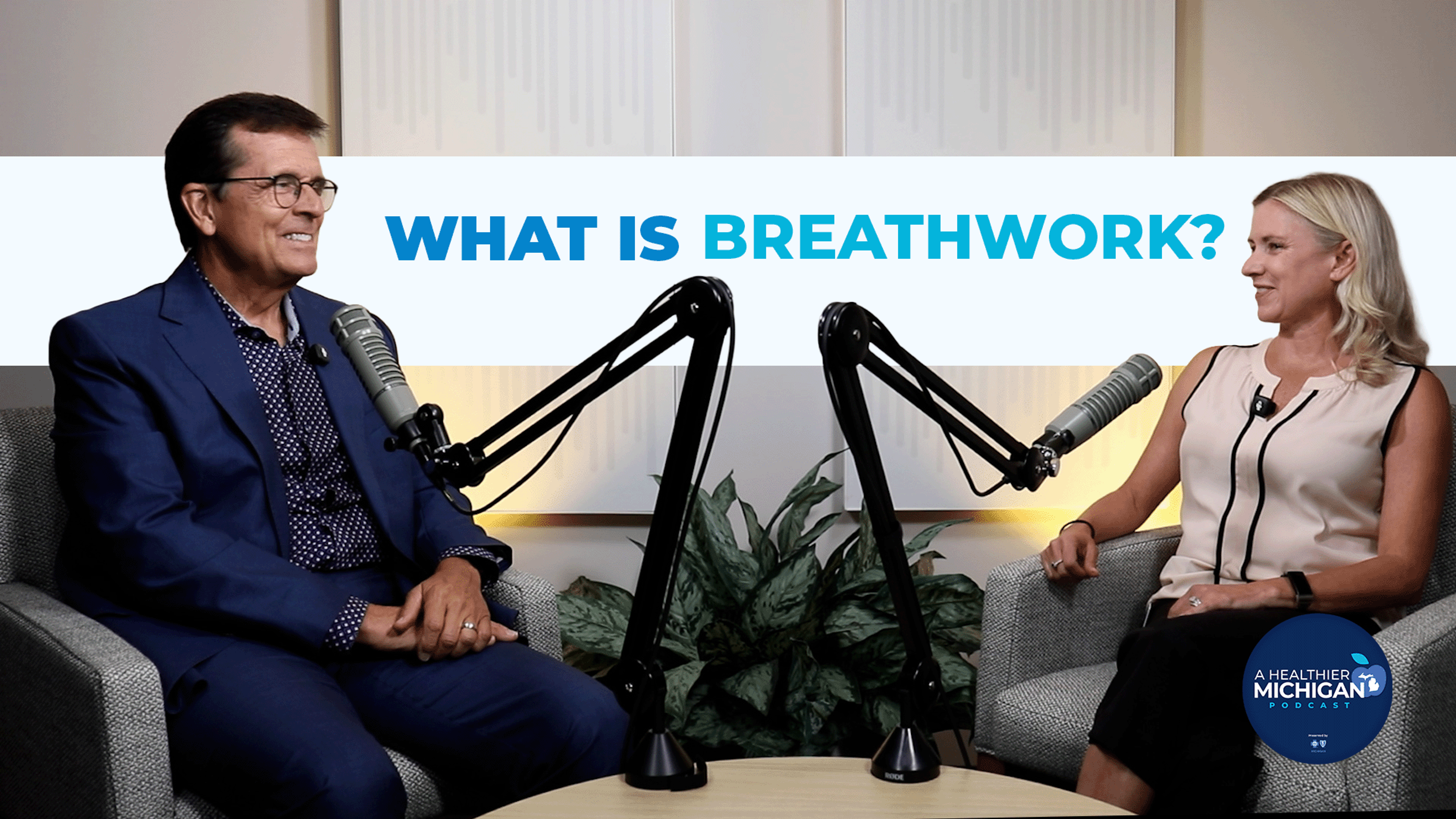
But what happens if we do it consciously and more mindfully? In the latest episode of the A Healthier Michigan Podcast from Blue Cross Blue Shield of Michigan, host Chuck Gaidica and Medical Director Dr. Jessica Huhn demystify the growing trend of breathwork and its benefits for physical and mental well-being.
What is breathwork?
Breathing is an automatic process most people rarely consider. However, Huhn emphasizes that intentional, patterned breathing, commonly referred to as breathwork, can be a powerful tool for managing stress, improving focus, supporting sleep and promoting overall wellness. She notes the surge in breathwork’s popularity, particularly following the COVID-19 pandemic, as more people seek easy and accessible ways to care for their mental health.
Breathwork includes techniques that range from simple deep breathing to more structured patterns such as box breathing. Huhn explains that our breathing is closely connected to the autonomic nervous system. Deliberate deep breathing can activate the parasympathetic system, which is the body’s “rest and digest” mode, helping to calm nerves and reduce physical tension during stressful situations.
Breathwork is not only for moments of anxiety. It can be woven into daily routines, whether you are preparing for a big presentation, winding down before bed or simply needing to reset during a hectic day. Huhn shares that she uses box breathing before presentations: inhaling for 4 seconds, holding for 4, exhaling for 4and holding again for 4. This simple pattern, also used in athletics and the military, is designed to calm the mind while maintaining focus.
What are the benefits of breathwork?
Benefits of regular breathwork, according to Huhn, include a regulated heart rate, relaxed muscles, lower anxiety, improved sleep and a greater sense of calm. She encourages listeners to find the technique that works best for their needs, whether it is belly breathing (breathing deeply from the diaphragm rather than the chest), box breathing or the 4-7-8 method, which is especially helpful at bedtime. The 4-7-8 method is breathing in for 4 seconds, holding for 7 seconds and exhaling through your mouth for 8 seconds.
Huhn cautions that breathwork is a valuable wellness tool, but it is not a substitute for medical care. She also dispels the myth that more is always better, since overdoing breathwork can cause lightheadedness or hyperventilation.
Both Gaidica and Huhn urge listeners to practice intentional breathing, not only for personal benefit but to encourage those around them to try it. These are practical tools anyone can use to support their well-being, anytime and anywhere.
Listen to the podcast, What is Breathwork?, to hear the entire conversation. A Healthier Michigan Podcast is brought to you by Blue Cross Blue Shield of Michigan.