How to Stop Coughing at Night

Jake Newby
| 4 min read
Jake Newby is a brand journalist for Blue Cross Blue...
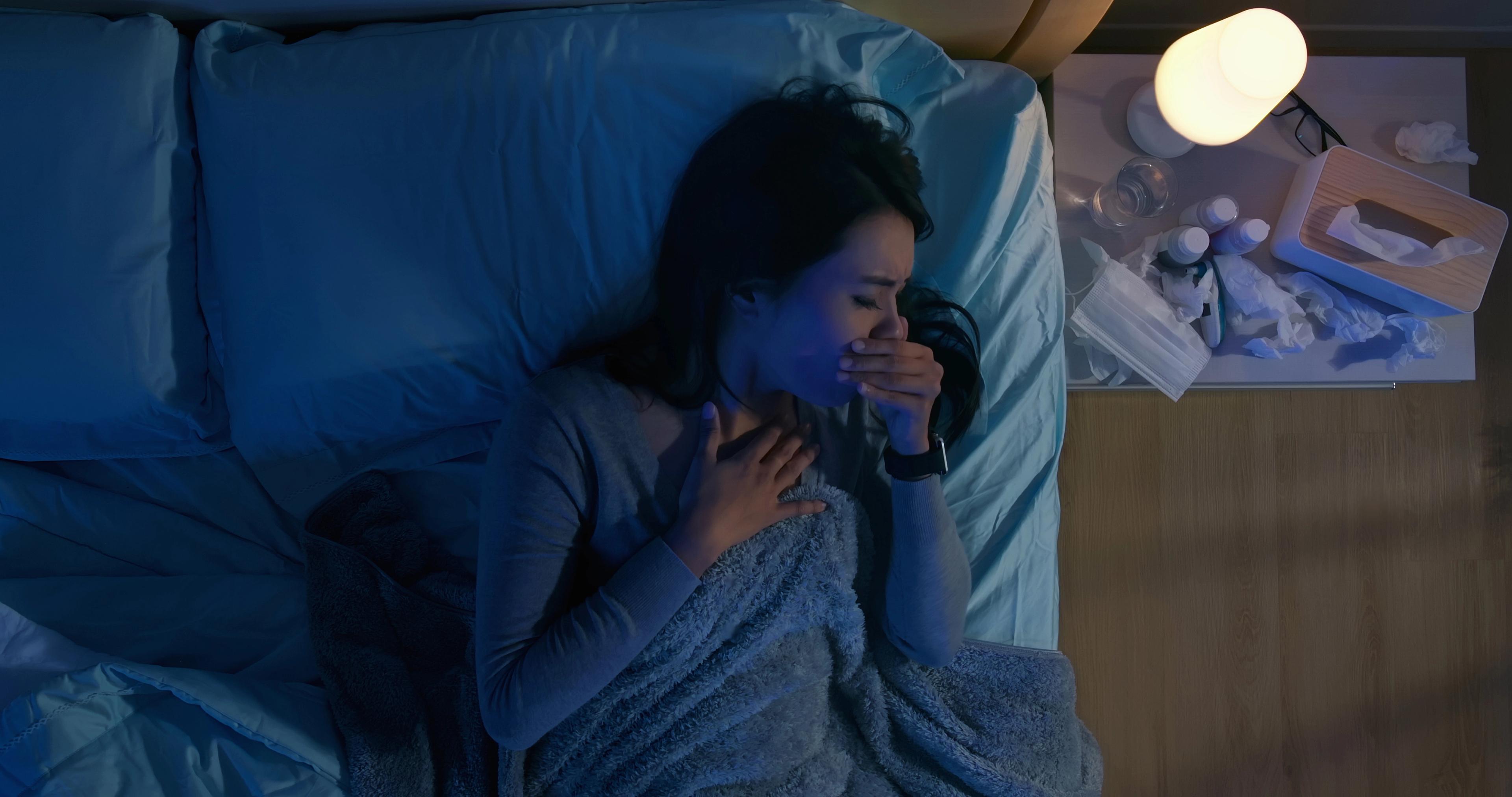
Key Takeaways
- Nighttime coughing often worsens when lying down because mucus and stomach acid can irritate the throat.
- Common causes include postnasal drip, GERD, allergies, asthma, respiratory infections and exposure to irritants.
- Home remedies like hydration, honey, saline spray and humidifiers may help reduce nighttime cough symptoms.
- Persistent, worsening or severe nighttime coughs should be evaluated by a primary care provider.
If you’re coughing more at night, elevating your head, staying hydrated, using a humidifier and addressing underlying causes such as allergies, acid reflux or postnasal drip may help reduce symptoms.
In addition to these tips, here’s what you should know about coughing at night, including causes behind the problem that may be specific to you. The right treatment depends on identifying what is triggering the cough.
Why is my cough worse at night?
Lying down can make mucus pool toward the back of your throat, triggering coughing, according to the Mayo Clinic. Nighttime coughing can also happen when lying flat, as this sleeping position allows stomach acid to move upward and irritate the throat.
Causes of nighttime cough in adults
A nighttime cough in adults can be temporary and may occur during a cold, become ongoing because of allergies or be exacerbated by asthma, Gastroesophageal reflux disease (GERD) or postnasal drip. Harvard Health says medications such as ACE inhibitors can cause a frequent, dry cough as a side effect. Your primary care provider (PCP) can help identify the cause when symptoms persist.
Pay attention to patterns that may offer clues. Coughing after meals or when lying down may point toward reflux, while coughing while wheezing may suggest asthma. Common causes include:
GERD may cause a chronic cough, according to research, because stomach contents can flow backward and irritate the esophagus or throat. Asthma can cause coughing as airways become inflamed and narrowed. If a cough keeps returning at night, your PCP can determine whether one or multiple conditions are responsible.
Home remedies for nighttime coughing
Drinking plenty of fluids can keep mucus thin and soothe an irritated throat. The U.S. Centers for Disease Control and Prevention (CDC) recommends running a humidifier or cool-mist vaporizer and using saline nasal spray and honey for cough relief in adults and children age 1 and older.
If postnasal drip is contributing to your cough, saline nasal irrigation may help clear mucus. If acid reflux seems likely, avoid lying down soon after eating and consider elevating your head. You should also avoid tobacco smoke, which can worsen coughing.
How to sleep with a cough
Try sleeping with your head and body elevated rather than completely flat. This may reduce throat irritation from postnasal drainage and help limit acid reflux. For reflux-related coughing, the Mayo Clinic recommends elevating the head of your bed and avoiding lying down after meals.
In addition to using a humidifier if the air in your bedroom is dry, keep a bottle of water on your nightstand. If congestion is triggering your cough, saline spray before bed may help.
When should I see a doctor for a cough?
Treating the underlying cause of your nighttime cough is often more effective than trying to manage it without a medical opinion. Talk with your PCP if your cough is persistent, worsening or interfering with sleep, especially if you have a fever, chest pain, difficulty swallowing, experience wheezing or experience thick or bloody mucus.
Concerning symptoms like these that may accompany a cough warrant more urgent medical attention. Seek emergency medical care for severe breathing trouble or significant chest pain.
How to stop coughing at night FAQs
How do I stop coughing at night?
Drink plenty of fluids, consider using a humidifier or cool-mist vaporizer and using saline nasal spray and consume honey. Avoid lying down soon after eating, elevate your head when you do lay down and avoid tobacco smoke.
Why does my cough get worse at night?
Lying down can make mucus pool toward the back of your throat, which can trigger coughing. Additionally, lying flat allows stomach acid to move upward and irritate the throat.
What is the best sleeping position for a cough?
Sleeping on your side with your head and upper body elevated is the best way to avoid mucus or stomach acid pooling in your throat and triggering a cough.
How long should a nighttime cough last?
A nighttime cough can last anywhere from a few days to several weeks, depending on the cause. Persistent or severe coughing that exceeds three weeks, keeps getting worse or interrupts your sleep should be evaluated by your PCP.
Photo credit: Getty Images