When to Worry About Thyroid Nodules

Jake Newby
| 4 min read
Jake Newby is a brand journalist for Blue Cross Blue...
Key Takeaways
- More than 90% of thyroid nodules are noncancerous, but they can still develop into cancer.
- An ultrasound can help evaluate a thyroid nodule and determine the need for biopsy.
- Rapid growth over the course of weeks or months can sometimes signal a more serious type of cancer.
- If your thyroid nodule is causing voice or swallowing problems, your PCP may recommend surgically removing all or part of the thyroid gland.
Roughly half of all Americans will develop a thyroid nodule at some point in their life, according to Johns Hopkins Medicine. So, while they are common and more than 90% of thyroid nodules are benign (noncancerous), they can still develop into cancer. Staying vigilant and working with your primary care provider (PCP) to track the development of your thyroid nodule can be a lifesaving endeavor.
A troublesome thyroid nodule can often be successfully managed. Here’s everything you need to know.
What is a thyroid nodule?
A thyroid nodule is a growth of cells that develop on your thyroid gland. Located in your neck, the thyroid is a butterfly-shaped, hormone-producing gland that regulates the body’s metabolism and growth and secretes the following hormones like thyroxine, triiodothyronine and calcitonin, which play a role in regulating important bodily functions such as body temperature, metabolism and digestion.
Thyroid nodules fall into four classifications, according to the Cleveland Clinic:
- Solitary (a single nodule)
- Multiple (more than one nodule)
- Cystic (fluid-filled)
- Solid
How are thyroid nodules identified?
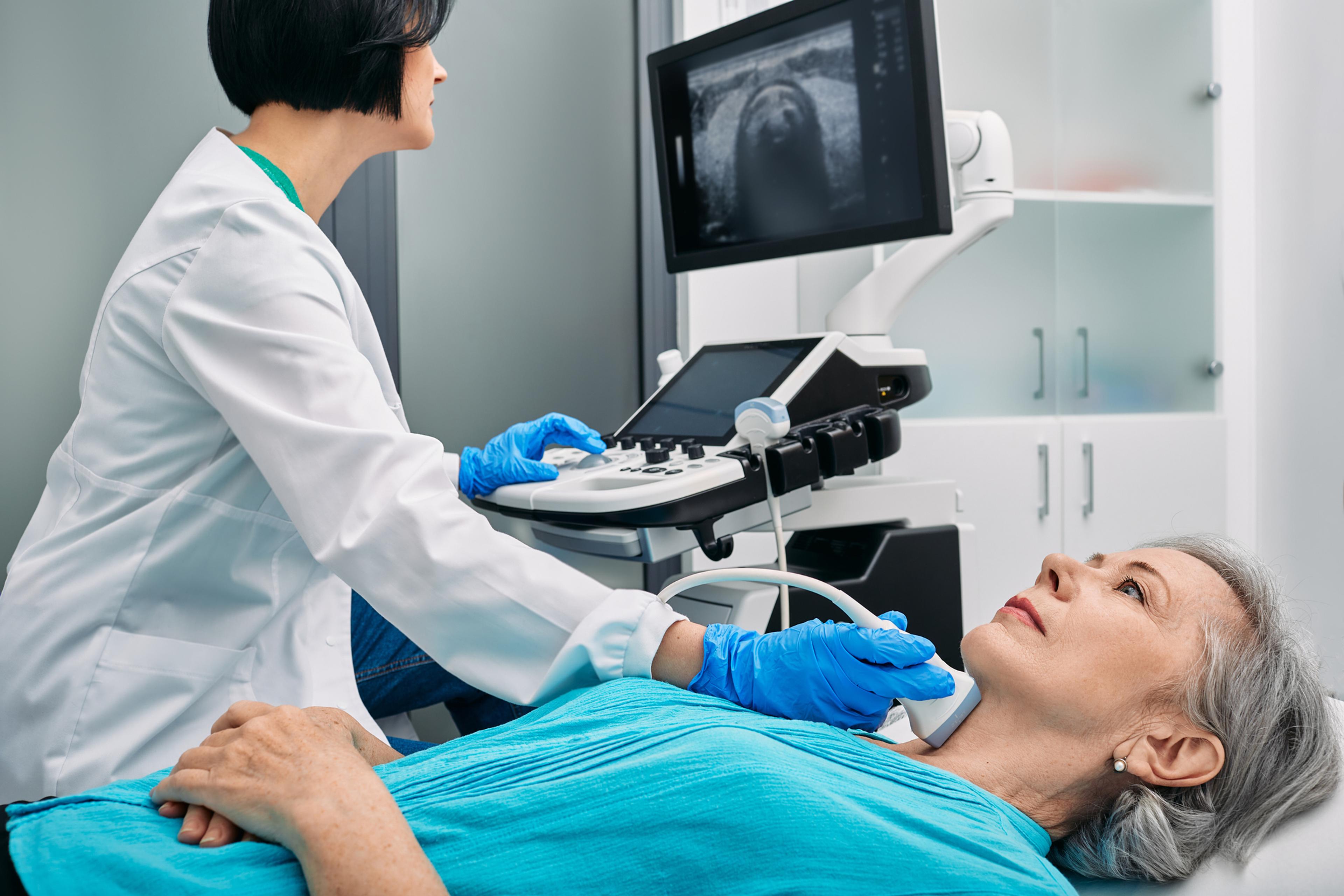
Occasionally you can feel or see a thyroid nodule yourself. Your PCP may also discover it during a physical exam, or while doing imaging for another health issue. An ultrasound can help evaluate a thyroid nodule and determine the need for biopsy, according to Johns Hopkins Medicine, which states that a thyroid fine needle aspiration biopsy can collect samples of the nodule’s cells. Your PCP can gather more information about the patterns and behavior of your thyroid nodule by viewing these cells under a microscope.
Thyroid nodule signs and symptoms to monitor
Thyroid nodules aren’t often a cause for concern, since most are benign. But you should call your PCP or schedule an appointment as soon as possible if you notice any of these developments in your thyroid nodule:
Rapid growth over the course of weeks or months can sometimes signal a more serious type of cancer. The same goes for noticing sudden enlargement of your thyroid gland – known as goiter – that causes pain and discomfort. Potentially concerning symptoms may include:
- trouble swallowing or breathing
- hoarseness or voice changes that don’t improve
- persistent neck pain
- pressure or tightness in the neck
- You have a family history of thyroid cancer: Some hereditary conditions are linked to an increased risk of certain types of thyroid cancer, according to the American Cancer Society. But these conditions are rare and account for only a small portion of thyroid cancer overall.
- A fixed lump that feels hard, irregular or doesn’t move when you swallow.
- Enlarged lymph nodes that feel swollen, or lymph nodes in the neck or above the collarbone that feel firm.
Treatment for thyroid nodules
If your thyroid nodule is causing voice or swallowing problems, your PCP may recommend surgically removing all or part of the thyroid gland. This procedure is known as a thyroidectomy. The surgeon reaches the thyroid through an incision made on the inside of your lower lip. Some individuals may be recommended to undergo a thyroid procedure, in which the surgeon reaches the thyroid through an incision made on the inside of your lower lip, per Johns Hopkins Medicine.
Radiofrequency ablation (RFA) is another option. RFA is performed with a thin probe using ultrasound guidance and uses heat generated by radiofrequency energy to shrink the thyroid nodule tissue. Most people treated with RFA can return to normal activities within a day or two and experience no issues.
You still have plenty of options on the off chance that your thyroid nodule develops into thyroid cancer.
Thyroid cancer is one of the most treatable kinds of cancer, according to the American Thyroid Association, especially when detected early. As is the case with the rare, problematic thyroid nodule, surgery to remove the gland usually eliminates the cancer, and recurrences or spread of the cancer cells are both uncommon.
Regular preventive care helps keep your body running smoothly, prevents problems, and detects health conditions like thyroid nodules in their earliest, most treatable stages. Learn more about the importance of preventive exams and routine check-ups here.
Continue reading:
Photo credit: Getty Images