Skin Cancer Warning Signs Everyone Should Know

Dr. Amy Milewski, M.D.
| 3 min read
Dr. Amy Milewski, M.D., is vice president of clinica...
Key Takeaways
- Perform a full‑body skin self‑exam monthly, checking all areas—including elbows, underarms, soles and scalp—and note any new, changing or symptomatic spots.
- Use the ABCDE guide (asymmetry, border, color, diameter, evolving) to spot warning signs; any irregularities warrant a prompt visit to a primary care provider or dermatologist.
- Adults, especially those over 65 or with risk factors such as fair skin, a family history of skin cancer, or frequent sunburns, should schedule an annual professional skin cancer screening.
As beautiful summer days call us to spend more time outdoors, it’s a good time to be more aware of the spots the sun can leave behind.
Even with generous and frequent use of sunscreen and other preventive measures that protect us from the sun’s harmful ultraviolet (UV) rays, individuals may still see freckles, moles or other noticeable spots on their skin. Most of the time, these spots are harmless. But occasionally, they can indicate a type of skin cancer.
Fortunately, there are warning signs that can help flag a potential issue before it becomes serious.
Perform a skin self-exam
Generally, skin cancer is highly treatable when found early. A helpful habit is to be aware of existing skin spots and regularly check the skin for any change. When people are familiar with how their skin normally looks, it’s easier to identify changes or spots that need further examination. A self-examination involves the following:
- Examine the entire body front and back, and on the sides with arms raised
- Look at elbows, forearms, underarms, palms and fingernails
- Scan the backs of the legs, feet, soles and even between the toes
- Check the back of the neck and scalp
Make note of any new spots, or changes to existing spots, as well as any spots that itch or bleed.
The ABCDEs of skin cancer
Make note of the following things when examining freckles, moles and other spots on the skin:
- A: Asymmetry: If part of the spot is uneven or looks different than the rest of the spot
- B: Border: If the edges of the spot are jagged, uneven or not well defined
- C. Color: If the spot has varied colors or different shades of color within the spot or if there are areas of red, blue or white within the spot
- D. Diameter: If the spot has grown in size (diameter), or if it is larger than a pencil eraser
- E. Evolving: If the spot is changing in color, size or shape.
Individuals who notice any of these signs should make an appointment with their primary care provider (PCP) or dermatologist for further evaluation. A doctor may recommend scheduling an annual full-body skin screening exam.
Who needs a skin screening exam?
In addition to individuals checking their own skin, adults can benefit from having an annual skin cancer screening performed by a medical professional.
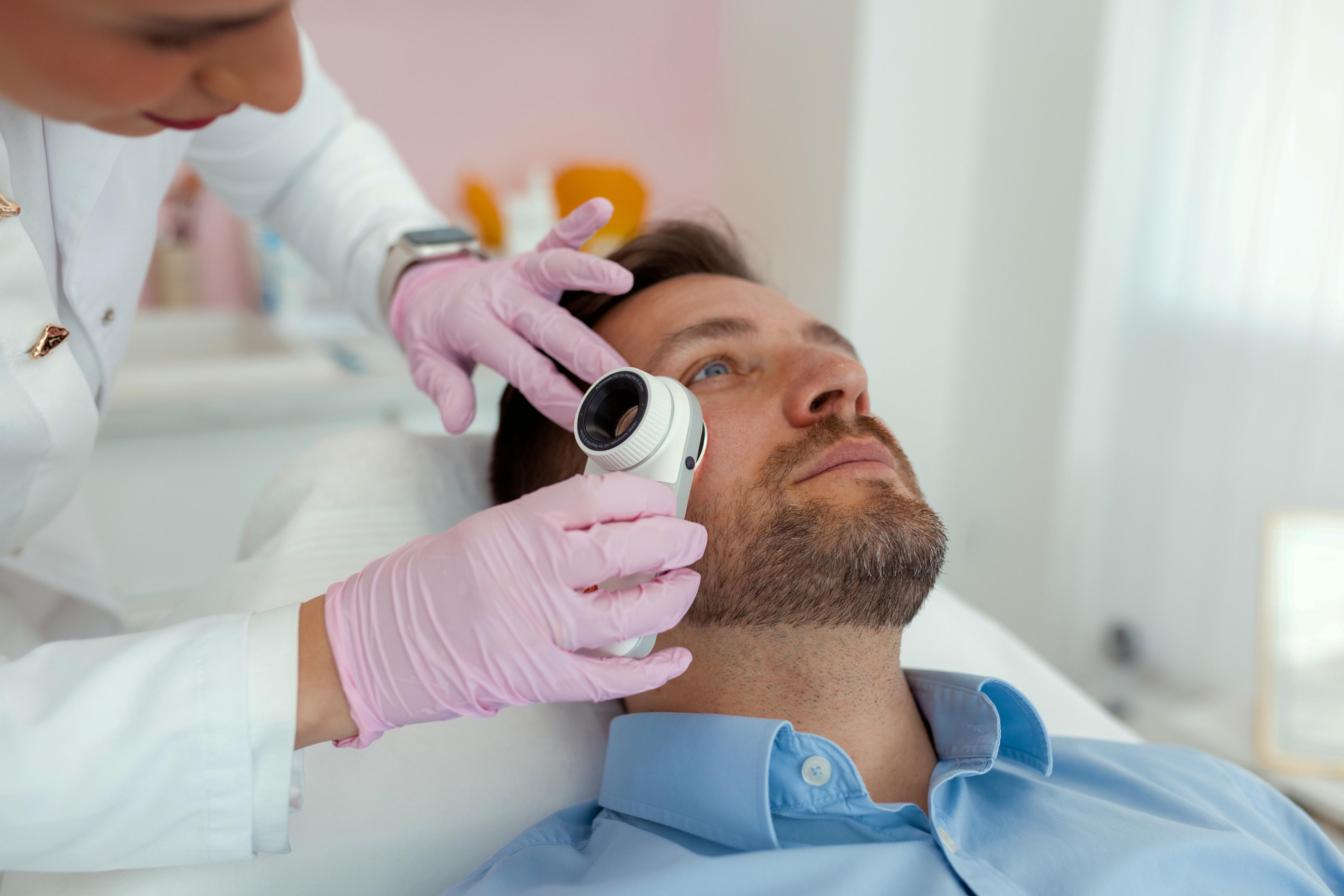
These exams last about 20 minutes and include a full-body visual examination of the skin. The doctor or medical staff may use a special type of magnifying instrument that allows them a closer look at any spots or moles. They also may take photos of spots for comparison at a later date.
If anything suspicious is found, they may take a small sample of the skin and send it to a lab for further evaluation.
Full-body skin exams are particularly important for those who are at higher risk of developing skin cancer. For example, those who:
- Have a family history of skin cancer
- Have had skin cancer already
- Are over age 65
- Have red, blond or light hair color
- Have light colored eyes
- Have fair skin
- Have had many sunburns, particularly burns with blisters
- Burn easily
Anyone can get skin cancer, no matter their age, skin tone or level of sun exposure. Fortunately, skin cancer is often treatable when found early. Performing regular skin self-exams and following up with a medical professional when there are noticeable signs helps with early identification and treatment.
Amy Milewski is vice president of clinical partnerships and associate chief medical officer at Blue Cross Blue Shield of Michigan. For more health tips and information visit bcbsm.mibluedaily.com.
Photo credit: Getty Images
Read on: