Can Walking After Surgery Aid Recovery?

Jazmin Anderson
| 3 min read
Jazmin Anderson is a 2026 Corporate Communications i...
Key Takeaways
- Walking after surgery can help prevent complications such as blood clots, lung problems, muscle weakness and extended hospital stays.
- Short, frequent walks help patients rebuild strength and stamina while preparing them to return to normal daily activities. Walking also may improve circulation, reduce constipation and gas pain, maintain joint flexibility, and support mental well-being.
- Patients should begin walking only when cleared by their health care team. Experts recommend setting gradual movement goals, seeking assistance when needed and establishing a regular walking routine at home, with a long-term goal of maintaining consistent physical activity during recovery and beyond.
Going through surgery can be a painful and physically demanding experience. During recovery, it can be tempting to stay in bed, but while rest is an important part of healing from an operation, gentle movement can help you avoid complications and return to your daily life sooner.
Walking after surgery can be the first step you can take toward regaining strength. Here are some benefits and helpful tips for getting back on your feet.
Benefits of walking after surgery
Medical centers encourage walking as soon as it’s safe after surgery to support a smooth recovery, according to Harvard Health. Early mobility can prevent lung complications, blood clots, weakness and longer hospital stays. A study conducted by Vanderbilt Health found that walking three times daily after surgery for inflammatory bowel disease significantly reduced hospital length of stay and readmission rates.
Short and frequent walks can help restore your strength and stamina, per the Mayo Clinic. Walking can help you prepare to safely return to everyday activities after surgery.
Some additional benefits of walking after surgery, according to the Memorial Sloan Kettering Cancer Center, are:
- Reduced constipation
- Eased gas pain
- Better blood flow
- Improved coordination
- Keeps joints flexible
- Prevents pressure injuries
- Improved mood and self-esteem
How to get started walking after surgery
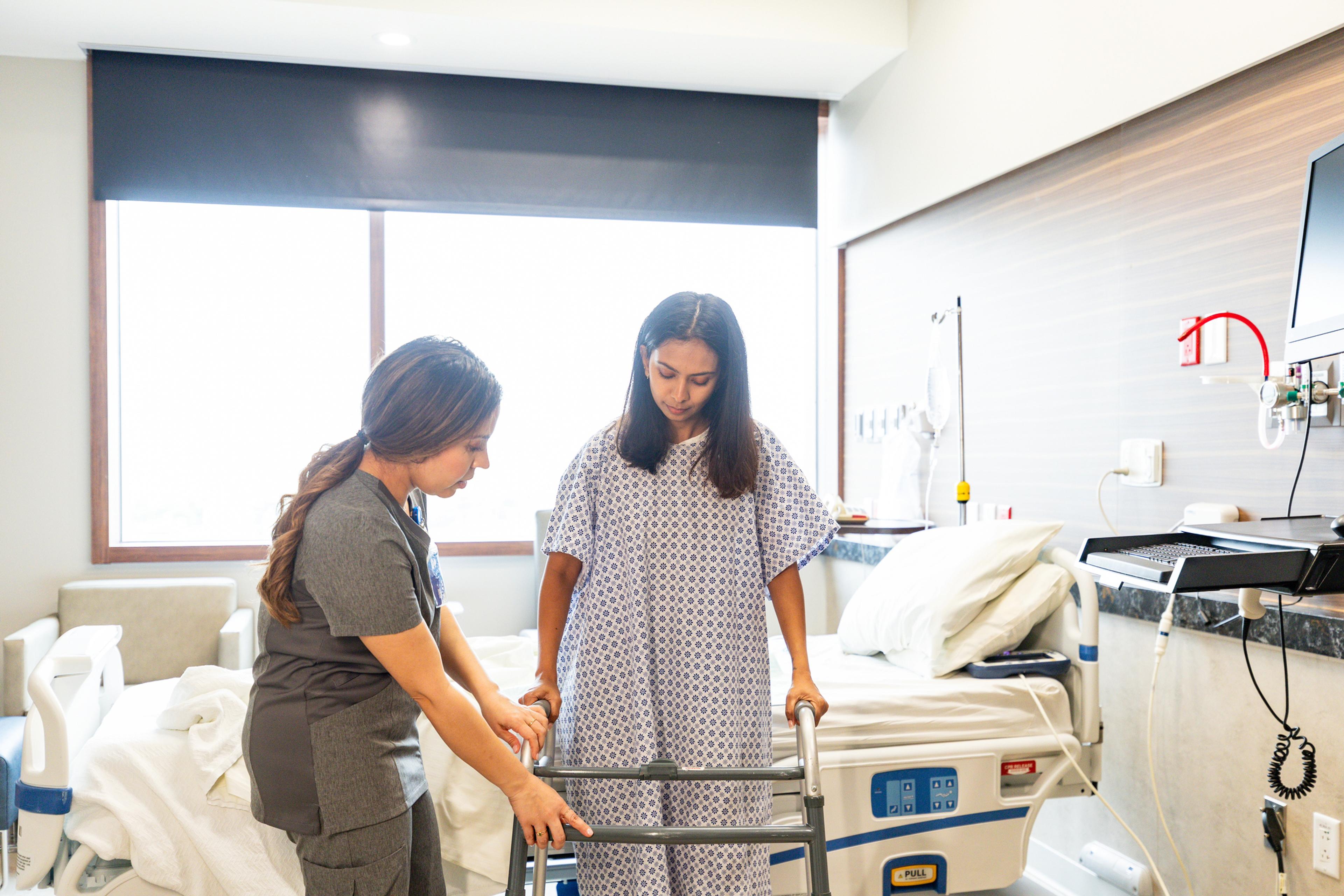
Your healthcare provider will tell you once it is safe for you to begin walking. Walking during your hospital stay is a crucial part of your recovery. Your care team will help you set goals for your movement. You may get a physical therapist or an occupational therapist to work with you, who will show you how to walk safely post-operation. It’s important not to start walking until your care team says it’s safe to do so.
Here are a few ways get started walking while in the hospital:
- Set goals: Try to walk every one to two hours during the day. Your care team can help you set safe goals. Aim to increase the amount you’re walking little by little every day.
- Ask for help: If you feel like you need assistance with walking, ask your nurse or patient care technician to walk with you. A physical or occupational therapist may also give you an assistive device if you need one.
- Prepare for walking: Ask your nurse to help you prepare for your walks. They may be able to give you a second gown to cover your back while walking or anti-slip socks and a walker to make you feel steadier.
Once you’re home from the hospital, you can create a daily walking schedule. Your goal could be to walk 30 minutes daily, broken up into shorter walks throughout the day, according to the Mayo Clinic. You could set reminders on your electronic devices to know when it’s time to get moving. Activity trackers such as smartwatches can help you track your progress.
Try sticking to a regular walking regimen throughout your recovery and beyond. The American Heart Association (AMA) recommends 150 minutes of aerobic exercise per week, which can be broken down into 30 minutes of walking five days a week.
If you experience any trouble walking steadily, talk to your care team. They may recommend you walk with another person or use an assistive device.
Photo credit: Getty Images