Primary Care and Value-Based Care: How We’re Reducing Health Care Costs
Blue Daily
| 4 min read
Key Takeaways
- Strengthening primary care and shifting to value-based payment models can lower health care costs by emphasizing prevention, early intervention and better management of chronic conditions, which drive most spending in Michigan.
- Blue Cross Blue Shield of Michigan’s value-based care approach rewards providers for quality, outcomes and efficiency rather than volume, reducing unnecessary services and improving patient health.
- Longstanding partnerships with physicians and hospitals have helped avoid more than $6 billion in health care costs over nearly two decades, limiting premium increases while improving care coordination and outcomes.
Health care affordability is one of the biggest challenges facing families, employers and communities across Michigan. At Blue Cross Blue Shield of Michigan, we believe the solution starts with a simple idea: a healthier population costs less to care for. That’s why we have a focus on strengthening primary care and transforming how health care is paid for by rewarding quality and outcomes instead of the number of services a member receives.
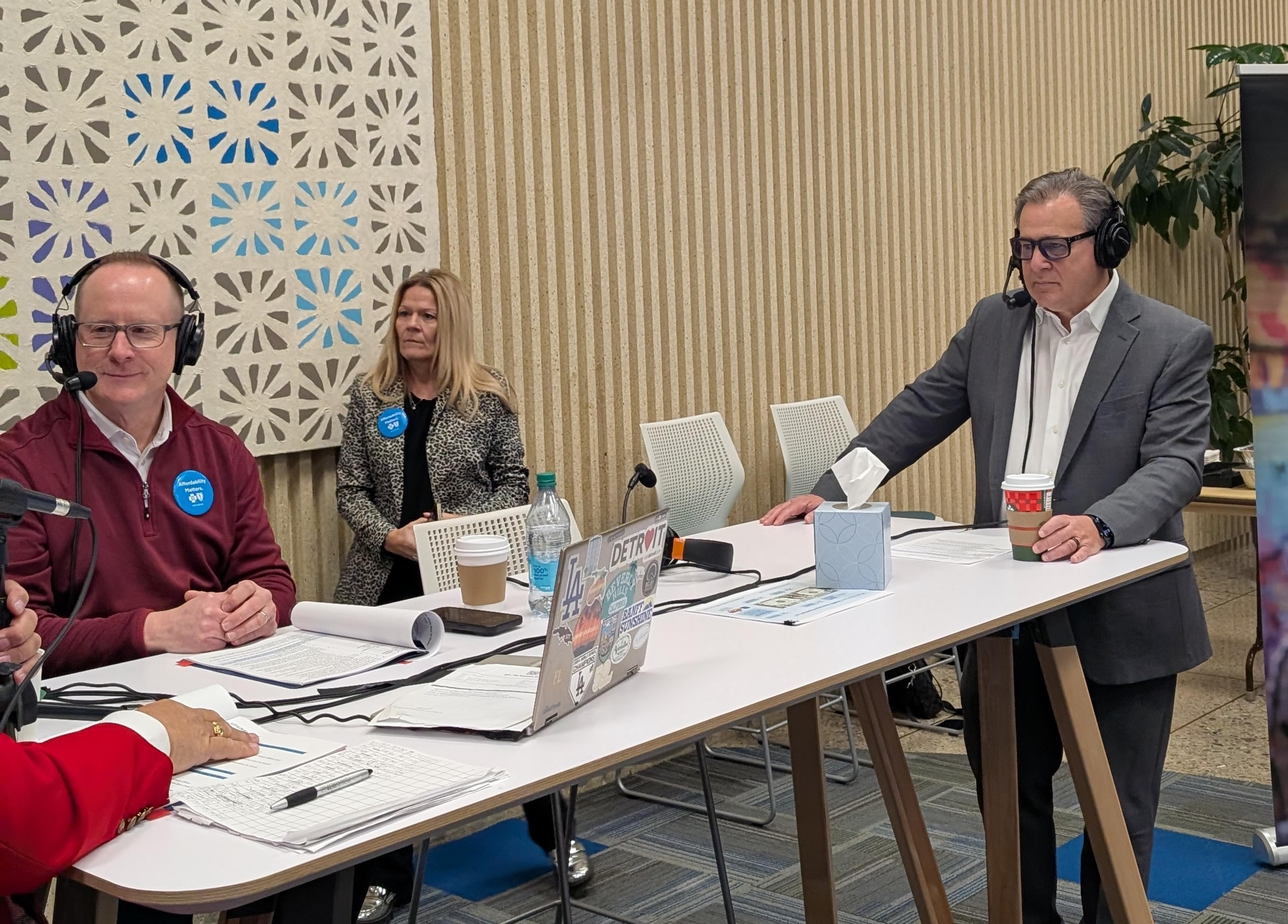
During the Michigan Big Show takeover, Dr. James Grant, Chief Medical Officer, Blue Cross Blue Shield of Michigan, shared how primary care and value-based care work together to reduce costs while improving health outcomes for our members.
Our Mission Goes Beyond Paying Claims
People may think of Blue Cross as an insurance company that only collects premiums and pays for health care services, said Andy Hetzel, Vice President, Corporate Communications, Blue Cross Blue Shield of Michigan, but we also have a mission to make Michigan healthier.
We do that by partnering with doctors, physician organizations and hospitals across the state and country to expand access to quality care, appropriate treatments and prescription drugs while improving how care is delivered.
The Cost Challenge: Aging and Chronic Conditions
Health care costs rise as people need more care, and Michigan’s population is aging. Older adults tend to use more health care services and are more likely to develop chronic conditions.
“In Michigan…chronic conditions are responsible for 75 cents of every dollar spent on health care, because as your conditions worsen, the health care services that you get become more expensive,” Hetzel said.
Addressing affordability means preventing disease when possible and managing chronic conditions more effectively.
Primary Care Is the Most Powerful Solution
“The health care system is very expensive and using it less moderates the cost. Keeping people healthy is the key, and preventing disease is easier than curing disease,” said Dr. Jim Grant, Chief Medical Officer at Blue Cross Blue Shield of Michigan.
Primary care is the foundation of prevention. When our members have a strong relationship with a primary care provider, they’re more likely to catch health issues early, manage chronic conditions and avoid unnecessary hospital visits. Annual wellness visits are covered at 100% for our members, making preventive care easier to access.
Fixing How Health Care Is Paid: Value-Based Care
One of the biggest drivers of rising health care costs is the outdated fee-for-service payment model, which pays providers for every test or procedure regardless of whether a patient’s health improves. This model encourages more services and higher costs.
That’s why we’ve been leading the shift to value-based care. Instead of paying for volume, we reward providers for improving patient outcomes, quality and efficiency.
“We don't want to pay them just for doing work. We want them paying for doing good work, for taking good care of our members,” Grant said. “What we're very proud of is that we have some of the best provider-physician relationships of almost any plan in the country.”
Our Solution in Action: Value Partnerships
Our Value Partnerships program is an award-winning, internationally recognized collaboration with physicians and hospitals across Michigan. Through shared data, best practices and meaningful incentives, we help providers improve outcomes and deliver care more cost-effectively for all patient populations.
Our Key Value Partnerships programs include:
Patient-Centered Medical Homes (PCMH)
PCMHs are care teams led by primary care physicians that focus on each patient’s needs and coordinate care across all settings. This model has resulted in better chronic disease management and fewer emergency room visits.
PCMHs are care teams led by primary care physicians that focus on each patient’s needs and coordinate care across all settings. This model has resulted in better chronic disease management and fewer emergency room visits.
Collaborative Quality Initiatives (CQIs)
CQIs bring hospitals and physicians together to improve outcomes, reduce complications and lower costs through shared data and collaboration.
CQIs bring hospitals and physicians together to improve outcomes, reduce complications and lower costs through shared data and collaboration.
Physician Group Incentive Program (PGIP)
PGIP connects primary care doctors, specialists, hospitals and physician organizations to collect data, share best practices and strengthen Michigan’s health care delivery system.
PGIP connects primary care doctors, specialists, hospitals and physician organizations to collect data, share best practices and strengthen Michigan’s health care delivery system.
Health Information Exchange (HIE)
HIEs allow physicians, hospitals, labs and skilled nursing facilities to securely share electronic patient information, enabling safer, more coordinated and more effective care.
HIEs allow physicians, hospitals, labs and skilled nursing facilities to securely share electronic patient information, enabling safer, more coordinated and more effective care.
Delivering Real Savings for Members
Through nearly two decades of leadership in value-based care, we’ve helped avoid more than $6 billion in health care costs by preventing disease, reducing unnecessary hospitalizations and improving care coordination. These avoided costs are dollars that have not been passed on to our members through higher premiums.
Programs like Blueprint for Affordability build on this work by aligning hospitals, physicians and Blue Cross around shared accountability for cost and quality ensuring everyone benefits when care is delivered efficiently and effectively.
The Path Forward
Primary care and value-based care have proven they work. But expanding these models across hospitals and specialty care is essential to achieving long-term affordability.
Affordable health care isn’t something any single organization can achieve alone. It requires partnership, innovation and a shared commitment to paying for quality — not quantity. At Blue Cross Blue Shield of Michigan, we’re committed to leading that change and turning proven solutions into better health outcomes and lower costs for the people of Michigan.
Image: BCBSM
Related: