Breathing Retraining Practices Help Older Adults in Metro Detroit Better Manage Asthma Symptoms

Jake Newby
| 5 min read
Jake Newby is a brand journalist for Blue Cross Blue...
Key Takeaways
- The BCBSM Foundation supported Dr. Alan Baptist's breathing retraining study with a $10,000 Physician Investigator Research Award.
- Up to 40% of people with asthma don’t experience their first attack until after age 40, making older adults the focus for Baptist's study.
- Breathing retraining is a therapeutic technique that focuses on restoring a slow, light and diaphragmatic pattern to increase lung capacity.
- Study participants reported higher asthma control test scores across the board, which has motivated Baptist to launch a larger version of this study in the near future.
Asthma is an overlooked, underdiagnosed and undertreated disease among older adults, according to a National Institutes of Health study.
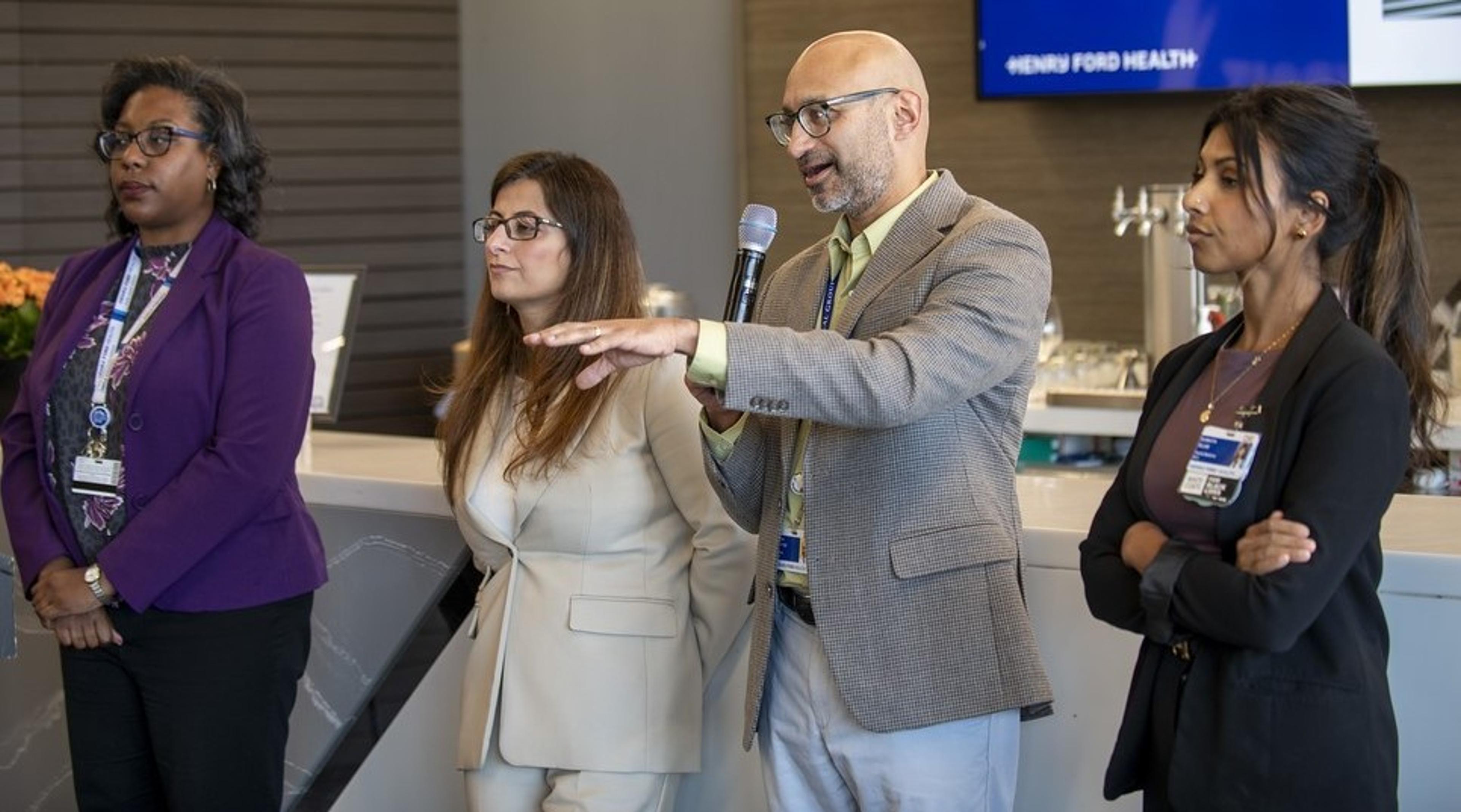
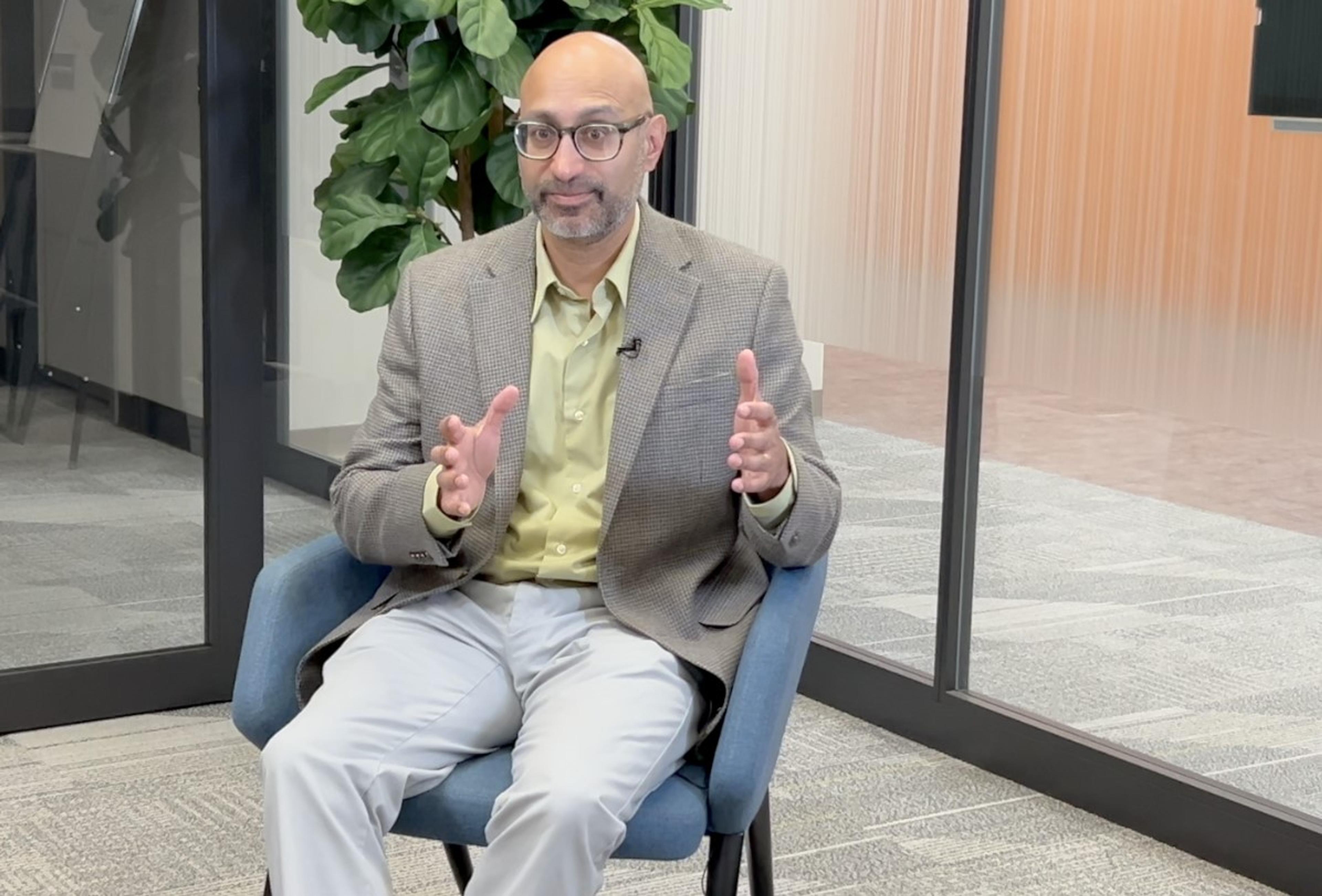
“Many people think asthma is a disease that affects children or that most adults will outgrow it, and we find that’s actually not true,” said Dr. Alan Baptist, the Division Head of Allergy and Clinical Immunology at Henry Ford Health.
Up to 40% of people with asthma don’t experience their first attack until after age 40, according to the Center for Managing Chronic Disease at the University of Michigan. When they do experience asthma attacks, they often experience some of the worst health outcomes – the Centers for Disease Control and Prevention states that adults age 65 and older have the highest asthma death rates of any age group in the United States.
Asthma’s overlooked nature among older adults also poses a significant threat to healthcare affordability, as it contributes to high hospitalization rates and emergency room (ER) visits relative to younger people with asthma.
Baptist took these facts and statistics under close consideration when developing a behavioral intervention that studied the effectiveness of breathing exercises for older adults with asthma in metro Detroit. The Blue Cross Blue Shield of Michigan (BCBSM) Foundation supported the intervention by awarding Baptist a $10,000 Physician Investigator Research Award in 2025.
But Baptist didn’t launch this study strictly because he thought it could be a breakthrough asthma treatment method – he let patients drive the nature of his research.
“We got this idea because the patients themselves were saying, ‘hey, give us something besides more medication,’” Baptist explained.
How can breathing retraining manage asthma symptoms?
In the preliminary portion of Baptist’s study, he researched the most effective ways to incorporate breathing exercises into asthma symptom management.
“We wanted to do it where people didn’t have to come into the group setting or clinic, because some older adults have challenges with transportation,” he explained. “We wanted to see if this could be in a remote, virtual setting through their computer or smart phone. And that’s what drove us.”
Baptist and Henry Ford Health partnered with Breathing Freely, an evidence-based, breathing and well-being program out of The University of Southampton in Southampton, England. That partnership led to the development of a remote intervention that incorporated a breathing exercise method known as breathing retraining.
Breathing retraining is a therapeutic technique that corrects dysfunctional breathing habits such as rapid, shallow chest breathing, to restore a slow, light and diaphragmatic pattern to increase lung capacity. It also focuses on breathing through your nose instead of your mouth. The American Psychological Association believes this technique helps you to focus your attention at times when you are not anxious.
“These are techniques that have been shown to be helpful for a number of different conditions,” Baptist added.
How BCBSM Foundation funds helped HFH introduce breathing retraining
The 11 participants were introduced to breathing retraining through a behavioral intervention led by a health educator that Baptist hired specifically to aid this study. Participants then went home to practice breathing retraining in a remote setting, guided by seven three-minute video sessions.
“BCBSM Foundation funds helped us develop the breathing exercises website that our participants interacted with closely, which is something we couldn’t have developed without that kind of support,” Baptist said. “And the funds helped us train our health educator, because the health educator actually hadn’t done a lot of these techniques before, so she needed to understand how to do them before teaching the patients she would be working with. The funds were really instrumental; we wouldn’t have been able to do this without them.”
The health educator was always on call to answer questions or help participants maneuver through any obstacles they faced while practicing at home.
“Dr. Baptist’s research showed us that these breathing techniques can be a reliable, supplementary way to manage asthma symptoms,” said BCBSM Senior Program Officer, Dr. Melissa Boguslawski. “The hope is he can take the success from the pilot funded by the Foundation and use it as a launching pad to one day make breathing retraining more of a standard in asthma care.”
Baptist monitored patients and their symptoms for one year. He used the asthma control test to evaluate how well symptoms and day-to-day life are being managed. Baptist said each of the participants’ asthma scores increased significantly.
“The older adults were ‘uncontrolled’ when they came in, and their average score shot up into the ‘controlled’ range, so we’re really happy about that,” Baptist went on. “We looked at their ‘asthma quality of life,’ a validated questionnaire for that score, and that also went up by over 25%, which is much higher than we thought it would.”
By every measure, the participants’ quality of life improved. And the majority of participants kept practicing breathing retraining exercises after the study had ended, according to Baptist.
Ultimately, the study was done to help people identify their asthma symptoms and manage them without taking more medication than they may have already been prescribed. A biproduct of this outcome was patients saving money on prescription costs and overall healthcare utilization, which Baptist believed they certainly appreciated. The next step is to conduct a larger controlled study.
“We’re applying for additional funding from the National Institutes of Health to do a much larger version of this, and now, we have this great preliminary data to take to them,” Baptist said. “Part of that step is a full economic analysis, because we have a feeling that this intervention will not be very costly. And we think it’ll save people a lot of healthcare costs, by keeping them out of the hospital, out of the emergency room, those types of things.”
Click here to learn more about the BCBSM Foundation’s Physician Investigator Research Award. And check out more BCBSM Foundation success stories below:
- The Eyes and Ears of the Court: How CASA Volunteers are Changing the Future for Foster Kids in Oakland County
- Manna Mobile Delivery Program Meets Northern Michigan Communities Where They’re at with Fresh Food Deliveries
- Removing Barriers to Focus on Healing: Haven Homes Detroit Provides Health Care Access to At-Risk Populations